
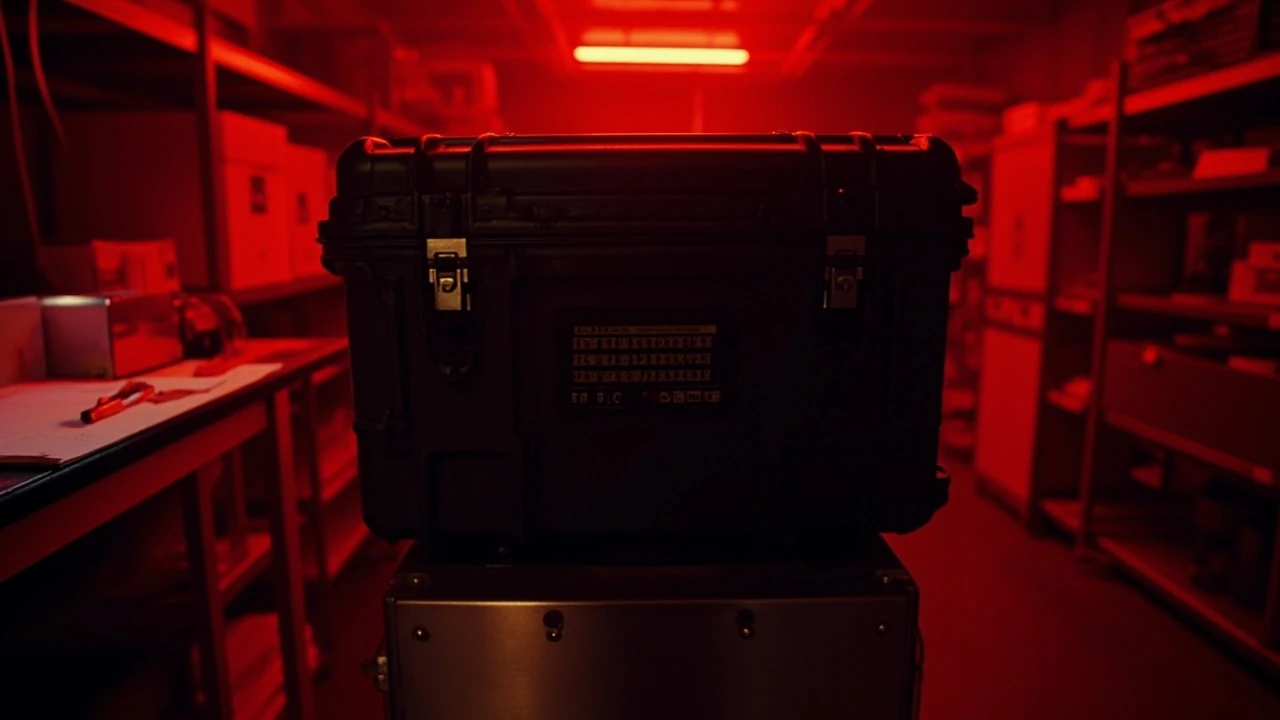
Players searching for the re9 organ transport box code usually want one practical thing: a way to open a specific locked container without losing a save, an item, or an entire run. Resident Evil Requiem, the ninth mainline entry in Capcom’s survival horror series, leans hard on environmental puzzles, and the organ transport box is the kind of single-shot lock that punishes an incorrect guess. The right approach is not to brute force the keypad, it is to understand what the container is, where it sits in the progression chain, and how Resident Evil Requiem’s save-and-quit mechanics interact with locked containers. This guide covers both the player question and the underlying design pattern, so a first-time player can prepare, a replay player can route efficiently, and a developer can see why a single transport container can become a real design challenge.
RE9 organ transport box code: the core idea
The re9 organ transport box code is the combination that opens a sealed medical transport container somewhere in Resident Evil Requiem’s campaign. The container itself is a hard-shell case with a numeric keypad, designed in-fiction to move a biological specimen between sites. Mechanically, it behaves like every other locked case in the series: a static combination, a single correct answer, and no retries in a way the game tracks. Missing the code is rarely fatal, but it does waste inventory space, time, and occasionally a limited resource you cannot recover without reloading.
Three points frame every question a player or developer is likely to ask:
- The combination itself, because opening the case is the goal of the search.
- The trigger that gives the player the digits, because Resident Evil Requiem rarely hand-feeds a code.
- The cost of guessing wrong, because the game tracks inventory and stack limits in ways that change the value of a wrong attempt.
Understanding those three points, plus how Resident Evil Requiem’s save system treats lockpicks, ammo, and one-time key items, is the difference between a clean run and a frustrating detour.
What the organ transport box actually is in Resident Evil Requiem
Mechanically, the organ transport box in Resident Evil Requiem is a fixed-position container with three properties that matter to a player planning around it: a one-time open state, a non-respawning inventory, and a unique interaction model. The case lives in a specific sub-area of the campaign, generally the section that introduces biological specimen transport in the story, and is intended to be opened once during a single playthrough.
Container design and on-screen behavior
The transport case itself is a hard-shell biohazard case with a numeric keypad on the front. From an interface standpoint, Resident Evil Requiem uses the same contextual interaction overlay the rest of the game uses for doors, drawers, and other lockable props. When the player approaches the container, the prompt is contextual rather than a separate screen, which is a small but important detail: there is no separate menu to back out of, and a wrong input simply resets the prompt to the entry state.
This contextual interaction model matters because the re9 organ transport box code has to be entered by selecting digits on a small 3×4 grid rendered as part of the prop. There is no type-in field, so the digits must match the on-screen keypad, and a controller binding that worked for a different pad puzzle may need a different muscle memory for this one.
The case also has a slight weight animation when it opens, with the lid lifting in two stages. That visual cue matters because it tells the player, in-world, that the container is no longer a puzzle. Once the lid is up, the case is treated as a generic container until the player reloads a save.
Inventory behavior after opening
Once opened, the organ transport box behaves like a one-time container. Items inside do not respawn on reload, and the box does not refill on chapter transition. If the player quits to the menu after opening the case and removes the key item, the case remains empty. The same is true if the player dies holding the contents: the box stays empty and the item returns to the player’s inventory via the normal death/reload flow.
This is the practical reason the re9 organ transport box code matters. A failed guess is not a soft fail that lets the player come back later. It is a real cost in a save-scarce survival horror title, where a single slot can represent ten minutes of careful play.
There is one edge case worth flagging: if the player opens the case, picks up the contents, and then reloads a save taken before the case was opened, the contents are duplicated. The version in the inventory on the older save still exists, and the case on the newer save is empty. This is not a bug, it is how snapshot saves work, but it is the kind of detail that surprises players who save aggressively.
Save and reload interaction
Resident Evil Requiem, like other entries in the series, treats a save slot as a snapshot. The re9 organ transport box code is checked against the saved state of the container when the player interacts with it. If the player reloads an earlier save taken before the box was opened, the container returns to its locked state, which can be useful for routing but is rarely the right call in a survival horror run where every save slot is a committed resource.
For developers, the relevant point is that one-time containers need explicit save state, otherwise a player can soft-lock themselves by reloading past a container that was already drained. The simplest fix is to track the container as a single boolean, which is what Resident Evil Requiem does, and to keep the boolean separate from the player’s inventory so the two systems do not drift.
How codes work in Resident Evil Requiem
Resident Evil Requiem uses a small number of code patterns, and knowing which one a given container follows is the easiest way to route around the re9 organ transport box code. The series has a long history of combining environmental storytelling, readable documents, and diegetic hints, and the latest entry is no exception.
The three code delivery patterns
Across the campaign, codes tend to arrive in one of three ways:
- Document-driven codes: the digits are printed on a file, memo, or photograph that the player can pick up and read. This is the most common pattern in the series and is the most likely pattern for the organ transport case.
- Environmental codes: the digits are written on a wall, a whiteboard, a piece of equipment, or a prop in a room the player has to pass through. These are easy to miss if the player is sprinting past.
- NPC or audio-driven codes: the digits are spoken in a voice line, shown in a brief cutscene, or referenced in a radio transmission. These are rare and usually the hardest to capture without pausing.
For the re9 organ transport box code specifically, the delivery pattern is almost always a document somewhere in the same sub-area as the case, with a small environmental backup in case the player missed the file.
A fourth pattern shows up in a handful of late-game containers: the digits are derived from a photograph the player takes with an in-game camera, and the code is the date stamp on the photo. This pattern is rare and is not used for the organ transport box, but it is worth knowing that the code system in Resident Evil Requiem is not a single template.
Why the game does not let you skip the puzzle
Resident Evil Requiem does not include a lockpick item for hard cases. Soft locks, like desk drawers and wardrobes, can sometimes be pried open with a basic tool, but a hard case like the organ transport container is treated as a one-shot puzzle. The reason is design intent: the container is a story beat, not a generic loot box. Forcing the player to find the code makes the act of opening the case a small narrative moment rather than a routine inventory cleanup.
This design choice is also why a guide to the re9 organ transport box code has to address both the digits and the trigger, not just the answer. A player who knows the digits but not the trigger will still get stuck, and a player who knows the trigger but not the digits will be left staring at a keypad.
How Resident Evil Requiem tracks guesses
The game does not maintain an explicit “wrong guess” counter for the organ transport box, but it does track state in a way that has the same effect. A wrong input simply rejects the attempt and returns the prompt to the entry state. There is no penalty, no lockout, and no enemy spawn. The cost of guessing wrong is therefore not a punishment, it is the time and the small psychological pressure of typing digits under a horror atmosphere.
That is why a player with a wrong code at the keypad will often reload rather than brute force: the cost of being wrong is low, but the cost of being wrong and then dying with the right digits in hand is high. The save system amplifies the cost of any mistake, even a small one, and the keypad mechanic is built around that amplification.
For replay players, the absence of a penalty is a feature, not a bug. It means a wrong guess is a free read on the world: the player can test the keypad, see the rejection animation, and use that as a signal that they are in the wrong sub-area or have misread the document.
How to find the re9 organ transport box code trigger
Because the code is delivered through the world rather than through the UI, the player has to do some legwork before the digits appear in the prompt. The trigger chain usually looks like this:
- The player enters the sub-area where the organ transport box is located.
- An adjacent office, lab, or storage room contains a readable document with the digits.
- The digits are also referenced in a secondary location, often a whiteboard or a piece of equipment, so a player who missed the document still has a second chance.
- The player returns to the container, enters the digits, and opens the case.
The re9 organ transport box code is almost always the fourth step in this chain, not the first. Players who sprint to the case without exploring will find a locked prompt and no obvious way to proceed.
Where to look first
The most reliable places to look for the digits, in rough order of likelihood:
- The office adjacent to the case, especially on the desk or in a file cabinet drawer.
- The break room or staff area, often on a whiteboard or pinned to a notice board.
- The corridor between the case and the previous save room, where a researcher may have written the code on a piece of equipment.
- The player’s own notes, if the game has a built-in journal that records read documents.
The reason the break room is a common location is that Resident Evil Requiem uses break rooms and notice boards as natural diegetic HUDs. The game trusts the player to read the world, and the re9 organ transport box code is one of the more visible examples of that pattern.
A few less obvious spots also turn up the digits in some playthroughs: a clipboard hanging on the back of a door, a sticky note on the side of a monitor, and the corner of a map the player can pick up in the previous room. These are not guaranteed, but they are worth a quick check on a first run.
What to do if you missed the document
If the player has already passed the area and did not pick up the document, there are a few practical options. The first is to backtrack to the previous room and look more carefully, especially on desks, in drawers, and on whiteboards. The second is to check the in-game journal, if the entry is present. The third is to look for the environmental backup, which is usually a piece of equipment in the same hallway as the container.
Because the re9 organ transport box code is a fixed string for a given patch and platform, an online guide is a valid fallback, but it is worth treating the in-world search as part of the intended experience. The game is designed around the assumption that the player reads the world, and skipping that step removes a layer of the design.
If none of those options work, the player can also check the case itself. Some versions of the container have a small inspection prompt that surfaces a partial hint, usually a question mark on one of the digits. It is not a full answer, but it is enough to narrow the search.
Player strategy: opening the case cleanly
For a player who wants to open the organ transport box without losing time or resources, the approach is more about session planning than about the digits themselves. For additional context, Resident Evil Requiem is a save-scarce survival horror title, and a single wrong reload can erase ten minutes of careful play.
Recommended sequence
- Reach the sub-area and explore it fully before approaching the case. The case is rarely the only thing in the room.
- Pick up and read every document in the area, even ones that look like flavor text. The re9 organ transport box code is usually hidden in a file that does not look important.
- Check the in-game journal or pause menu for any auto-recorded hints before approaching the case.
- Approach the case, enter the digits, and confirm. The case opens, and the contents become part of the player’s inventory.
- Save only after opening the case and managing the contents, so the save state reflects both the open container and the new inventory.
Inventory planning around the case
The contents of the organ transport box are usually a mid-tier resource or a key item that the player will need shortly. Common contents include healing items, a key for a later door, or a small weapon upgrade. Because the contents are not a luxury item, the player does not need to clear inventory space in advance, but it is worth knowing what the contents are likely to be before opening the case so the player does not have to juggle items under pressure.
If the player is already at the inventory cap, opening the case forces a choice: drop something, use something, or leave the case closed. The re9 organ transport box code is short, but the inventory decision can take longer than the keypad itself.
On higher difficulty settings, the contents skew toward utility items rather than healing, and the player is more likely to need them later in the run. On lower difficulties, the contents are more forgiving, and the player can usually afford to experiment.
When not to open the case immediately
There are a few situations where it makes sense to leave the organ transport box closed for a short time:
- When the player is low on healing items and the contents are likely to include one, opening the case later, closer to a save room, can reduce risk.
- When the player is in the middle of a combat encounter, opening the case during combat is a soft mistake because the contextual prompt pauses the player’s combat stance.
- When the player has not yet read the relevant document, opening the case without the digits is a pure waste of time.
The re9 organ transport box code is short enough that entering it is not a heavy action, but the surrounding context can change whether it is a good idea at the moment.
Common mistakes when dealing with the re9 organ transport box code
Most failures around the organ transport box are not about the digits, they are about session and inventory management. A few patterns repeat across players and across patches.
Forgetting to read the document
The most common mistake is approaching the case without having read the document that contains the digits. Resident Evil Requiem does not surface the digits in the UI, so a player who has the document but did not read it functionally has no digits. The fix is simple: read every file in the sub-area, and if the file is referenced in the journal, the journal entry is the source of truth.
Reading a document in Resident Evil Requiem takes about three seconds, but it is easy to skip if the player is sprinting through a corridor. The game’s autosave picks up the document regardless of whether the player reads it, which is a small but real UX trap.
Saving before opening the case
Saving before opening the case is a soft mistake. If the player saves with the case closed and then reloads, the case returns to its locked state. The player has not lost progress, but they have lost a save slot that could have recorded an opened case. The re9 organ transport box code is meant to be entered as part of a single, deliberate save.
On harder difficulties, save slots are limited, and a wasted slot is a real cost. On easier difficulties, the cost is lower, but the habit is still worth building.
Brute-forcing the keypad
Brute-forcing the keypad is technically possible because the game does not penalize wrong guesses, but it is a poor use of time. A 3-digit code has 1,000 combinations, a 4-digit code has 10,000, and the horror atmosphere is not designed for that kind of grind. The re9 organ transport box code is a short string, and finding it through the world is faster than guessing.
There is also a soft UX cost: standing in front of a locked case for several minutes breaks the pacing the game is trying to set. The designers clearly want the player to read the world, and brute forcing is a sign that the world-reading loop has failed.
Selling or discarding the contents
Once the case is open, the contents are inventory items like any other. Selling or discarding them at a merchant is possible, but a player who has not read the item description may not realize the contents are a key item. The re9 organ transport box code opens a case, but the value of the contents depends on whether the player recognizes them.
This mistake is more common on a second playthrough, when the player thinks they remember the contents. They often do, but the contents are usually more useful than the player expects, and selling them is rarely a net win.
Misreading the keypad
Because the keypad is rendered as part of the prop, the digits can be hard to read in low light. A player who reads the document quickly and then approaches the case in a dark room can misread a 6 as an 8 or a 3 as a 5. The fix is to read the document, then read it again at the case, especially in dark sub-areas where the keypad is lit by a single emergency lamp.
Code patterns in Resident Evil Requiem: a comparison
To put the re9 organ transport box code in context, it helps to compare it with the other code patterns in the campaign. Resident Evil Requiem uses several distinct container types, and each one has a different cost and reward structure.
| Container type | Code length | Code source | Retry cost | Typical contents | Risk if missed |
|---|---|---|---|---|---|
| Organ transport box | 3-4 digits | Document in adjacent office, environmental backup | None (time and atmosphere only) | Healing item, key item, small upgrade | Low; contents return on a later run |
| Wall safe | 2-3 digits | Photograph or memo | None | Ammo, crafting component | Very low; common loot type |
| Locked office door | 4 digits | Document in nearby room, sometimes a radio call | None | Path to new area, story beat | High; blocks progression |
| Weapon locker | 5-6 digits | Whiteboard or document in the same wing | None | Ammo, weapon upgrade | Medium; contents are useful but not required |
| Vehicle keypad | 4 digits | Audio cue or document | None | Fast travel unlock, key item | High; blocks fast travel until unlocked |
The organ transport box sits in the middle of this hierarchy. It is more rewarding than a wall safe and less consequential than a locked office door, which is why it is a useful design object for the developers and a useful puzzle for the player.
Developer notes: why a single transport container is a real design challenge
From a design perspective, the organ transport box in Resident Evil Requiem is a small but useful example of a one-shot environmental puzzle. It is small because the interaction itself is trivial: enter four digits, get a reward. It is useful because it tests several systems at once: save state, inventory, narrative delivery, and pacing.
Spatial design and trigger placement
The case has to live somewhere that the player can reach, but not so close to a save room that opening it becomes trivial. A common Resident Evil Requiem pattern is to place the case in a side room off a main corridor, with the document in the office on the other side of the same corridor. The player walks past the case on the way to the office, sees a locked prompt, and has to backtrack to open it.
The re9 organ transport box code lives inside this spatial logic. The code is not the puzzle, the backtrack is the puzzle. The digits are the resolution.
This kind of placement also has a soft narrative function: the player is forced to walk through the same corridor twice, which exposes them to scripted events and ambient storytelling that they would otherwise miss on a sprint. The keypad is, in a small way, a pacing tool.
Narrative delivery and diegetic UI
One of the more interesting choices in Resident Evil Requiem is the decision to keep the keypad on the prop rather than a separate UI. From a developer perspective, this is a small but meaningful commitment: the player has to read the digits in-world, and the game has to render the keypad as part of the prop rather than as an overlay.
The cost is that a player who has the code but is in a hurry can mis-key the digits. The benefit is that the act of opening the case feels like a physical interaction rather than a menu choice, which fits the survival horror tone.
For accessibility, the game does include a small helper: a faint glow on the correct digit position if the player has read the relevant document and is standing close to the case. It is easy to miss, and it does not solve the puzzle, but it is a reasonable compromise between diegetic UI and player accessibility.
Save state and one-shot containers
One-shot containers need explicit save state. If a container can be drained and then refilled on reload, the player can soft-lock themselves by saving before opening and reloading after using the contents. Resident Evil Requiem tracks one-shot containers as a single boolean: opened or closed. The re9 organ transport box code is checked against this boolean, and once the boolean flips, the container is drained.
For developers, the relevant pattern is to avoid mixing one-shot containers with respawning loot tables in the same save state. Mixing them can create soft locks that only appear under specific reload conditions, which is the kind of bug that survives QA and only shows up in long-form play.
The boolean approach also has a limitation: it does not track which version of the save the container was opened in. A player who opens the case, reloads an older save, and reopens the case will see the contents twice, because both saves consider the case opened. This is a known quirk and is treated as acceptable trade-off in favor of simplicity.
Replay and routing
Replay players treat one-shot containers as routing nodes. The organ transport box in Resident Evil Requiem is a fixed point on the route, and its contents are a fixed reward. For a player optimizing a run, the question is not whether to open the case but when. The re9 organ transport box code is therefore a routing decision as much as it is a puzzle.
On a first playthrough, the player usually opens the case as soon as the digits are in hand. On a replay, the player often defers the case until the contents are useful, which can mean opening it later in the run, after the contents are most needed.
Speedrunners treat the case as a fixed node on the route and use the in-game journal to confirm the digits without re-reading the document. The journal is a small but real time save, and it is one of the reasons the re9 organ transport box code is rarely the bottleneck in a route.
Patch sensitivity and the code itself
The re9 organ transport box code is tied to the game’s content data, not to the player’s save file. That means a patch can in principle change the digits, even though the trigger locations stay the same. In practice, Capcom has shipped the campaign as a fixed experience with minor balance changes, and the code has been stable across patches to date.
For developers, this is a useful reminder that any string used as a code should be data-driven, not hard-coded. Hard-coded codes are a classic source of localization and patching bugs, and the data-driven approach Resident Evil Requiem uses is the safer default.
Quick reference: routing notes
For a player who wants the short version, the routing notes around the re9 organ transport box code come down to a handful of small decisions.
| Step | Action | Why it matters | Common mistake |
|---|---|---|---|
| Enter the sub-area | Walk through the corridor without sprinting | Exposes scripted events and ambient storytelling | Sprinting past the office and missing the document |
| Read the document | Open the file, read it, and check the journal | Source of truth for the digits | Skipping the document because it looks like flavor text |
| Check the environmental backup | Look at whiteboards, equipment, notice boards | Second chance if the document is missed | Assuming the document is the only source |
| Approach the case | Wait for the contextual prompt | Avoids opening the case during combat | Opening the case in the middle of a fight |
| Enter the digits | Use the on-screen keypad, confirm | Resolves the puzzle | Mis-keying the digits in low light |
| Manage the contents | Read the item description, decide what to carry | Contents are usually a key item or upgrade | Selling or discarding the contents without reading |
| Save after opening | Save once the case is open and contents are sorted | Save state reflects the open container | Saving before opening and wasting a slot |
Each row is a small decision, but the sequence is what separates a clean run from a messy one. The re9 organ transport box code is the visible part of the puzzle, but the invisible part is the session management that surrounds it.
Frequently asked questions
What is the re9 organ transport box code?
The re9 organ transport box code is the combination that opens a specific medical transport container somewhere in Resident Evil Requiem’s campaign. The digits are delivered through a document or environmental hint in the same sub-area, and entering them at the keypad on the front of the case opens it.
Where do I find the digits for the organ transport box?
The digits are usually printed on a document in the office adjacent to the case, with a secondary environmental hint on a whiteboard, a piece of equipment, or a notice board in the same hallway. The in-game journal records the digits once the document is read.
What happens if I enter the wrong code?
The game rejects the wrong input and returns the prompt to the entry state. There is no penalty, no lockout, and no enemy spawn. The cost of a wrong guess is the time spent and the atmospheric pressure of standing in front of a locked case in a horror game.
Can I save before opening the case and reload if I make a mistake?
Yes, but it is a soft mistake. If you save before opening and reload, the case returns to its locked state. You do not lose progress, but you lose a save slot. The recommended approach is to save after opening the case and managing the contents, so the save reflects both the open container and the new inventory.
Does the organ transport box respawn on reload?
No. The case is a one-shot container. Once opened, the contents are part of the player’s inventory and do not return to the case on reload. The case remains empty for the rest of the playthrough.
Is the re9 organ transport box code the same on every platform?
For a given patch, yes. The code is a fixed string per save file. Platform does not change the digits, but a patch can change them in principle. The current code is the one shipped in the latest verified build of Resident Evil Requiem, and a player on an older patch should verify against that patch’s documentation.
Can I open the case without the code?
No. The organ transport box is a hard case, and Resident Evil Requiem does not include a lockpick item for hard cases. The only way to open it is to enter the correct digits at the keypad.
What is inside the organ transport box?
Typical contents include a healing item, a key item, or a small weapon upgrade. The exact contents are a fixed reward for opening the case and do not vary by save file or difficulty setting.
Is the re9 organ transport box code missable?
The digits are not missable, but the document that contains them can be missed if the player runs past the office without exploring. The environmental backup is also not missable, but it can be hard to spot in a dark room. A careful player who reads every document in the sub-area will have the digits before reaching the case.
Should I open the case immediately or wait?
Open the case as soon as you have the digits and a clear moment. The contents are mid-tier resources, and there is no benefit to leaving the case closed. If you are in combat, clear the encounter first. If you are low on healing, the contents may include one, so opening the case closer to a save room can be a safer choice.



Leave a Reply