
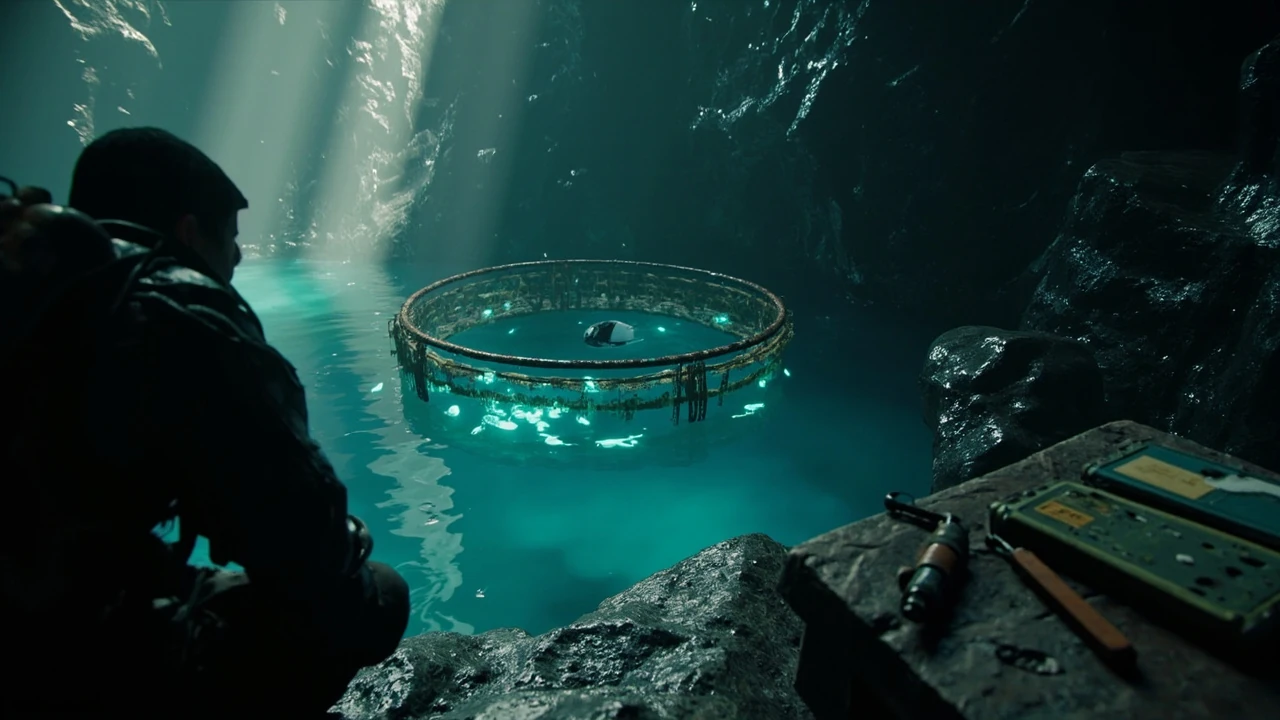
Tadpole pens subnautica 2: what the term actually points to in the early access build
Anyone searching for tadpole pens subnautica 2 right now is usually after a very practical question: is the feature actually in the early access build, and if so, what does it do. The honest answer is that the public information is narrow. Subnautica 2 is in early access, the developer has published a roadmap and a few official updates, and a small number of community wikis and creator guides are already tracking early play data. The phrase “tadpole pens” is shorthand for a player-built enclosure that holds the small, tadpole-shaped larval fauna introduced in the sequel’s onboarding biome. It is closer to a husbandry structure than a base room, and it sits at the intersection of food security, oxygen management, and the new risk systems the sequel is testing.
This article treats the topic as a field reference for players and for anyone curious about how the system is being designed. It explains what the structure is, what the early access build confirms, what is still being inferred from community play, and which decisions the development team has not yet documented. Because the build is still moving, the article flags confirmed facts separately from observations, so that any reader can tell which parts are stable and which are likely to change in the next several patches. Where a number, recipe, or yield is mentioned, it should be read as a snapshot of a build that is still being iterated, not as a permanent rule of the game.
What “tadpole pens” refers to in the sequel
In the context of Subnautica 2, a tadpole pen is a small, enclosed habitat that the player constructs to house larval fauna. The label is informal, taken from how the early player community describes the structures, and it draws a clear line between the original game’s fish tanks and the sequel’s approach to small fauna. Where the original Subnautica used aquarium decoration mostly as a base-flavor feature, the sequel is treating certain small fauna as a renewable resource, and the pen is the structure that makes that resource usable over time. A pen is not a vanity object. It is a working piece of equipment that has to be sited carefully and revisited regularly if the player wants any return from it.
The term combines two ideas. The “tadpole” part comes from the shape and life stage of the fauna in question, which hatch at a larval size and grow under specific environmental conditions. The “pen” part comes from the construction model, which is closer to a fenced enclosure or a holding pen than a glass tank. A pen is not necessarily beautiful, it is functional, it is often built from local salvage, and it is meant to be placed where the relevant species actually lives rather than moved to a distant base. That detail matters, because the sequel’s small fauna are sensitive to depth, light, current, and the presence of larger predators, and a pen that ignores those parameters tends to empty itself within a few in-game hours.
How the original game handled similar features
In the first Subnautica, decorative tanks held captured fish but had no survival function. Players who wanted a continuous food supply either built a growbed in their base biome or relied on hunting larger fauna. The sequel is moving away from that model in two ways. First, several small species are now larvae that mature under specific conditions, which means a captured specimen is the start of a process rather than a finished product. Second, the base-building system is more modular, so smaller structures can be placed in a wider range of biomes, including shallow and mid-depth water, not only inside a sealed multipurpose room. The result is that a pen is one of the few early-game investments that scales with the player’s ambition: a single shallow pen in the first session, then a string of deeper pens once the player has the materials and the oxygen capacity to reach them.
That design shift is the reason the term “pen” has appeared in community guides. A pen fits the sequel’s pattern: cheap to build, easy to relocate, designed to interact with the surrounding ecosystem, and small enough to be deployed during the early game rather than waiting for a fully kitted base. It is also the kind of structure that experienced players tend to ignore at first, because it looks too small to matter, and then build a dozen of once they realize how much time they spend hunting the same shallow species over and over.
Why the feature matters to survival systems
Survival in Subnautica 2 leans heavily on calorie density and oxygen budgeting. The original game pushed players toward a single dominant food source, usually peepers or bladderfish, because the cost of diversifying outweighed the benefit. The sequel is using small fauna to make diversification more attractive, and the pen is the structure that makes diversification stable. Without an enclosure, larvae collected in the wild tend to leave the area, get eaten, or fail to find the conditions they need to mature. With an enclosure, the player controls the parameters, which is the difference between a one-time catch and a reliable supply. That shift also changes how the early game feels: instead of choosing one species to grind, the player can run two or three pens at different depths and rotate between them as the day passes.
There is a secondary effect as well. A pen forces the player to learn the local water column, because the structure only works when it is placed inside the right depth band and the right kind of current. Players who build even a single pen end up reading the seafloor more carefully than players who only hunt, and that habit pays off in every other system the sequel is shipping.
What the early access build currently confirms
The following points are supported by official material from Unknown Worlds Entertainment and the storefront page for Subnautica 2, rather than by speculation. They are the stable points that a player can plan around in the current build, and they are the points that community guides are trying to extend with their own data.
- The game is in early access, published through Xbox Game Preview and Steam Early Access, with a stated development window that includes ongoing content updates and a roadmap of system changes.
- Small, larval-stage fauna are present in the onboarding biomes and are described in the official material as part of the survival loop, not as decoration.
- Modular base building supports smaller, stand-alone structures that can be placed in the water column, not only inside a sealed room, which is what makes pen-style structures possible in the first place.
- Food, water, and oxygen remain the primary survival pressures, with crafting recipes and equipment progression designed around gradual diversification of those resources rather than a single dominant source.
- Two-protagonist co-op is planned as a major post-launch feature, and the official material describes the second player as having a role in base management, which is where pen structures are expected to fit.
What the official material does not yet confirm is the specific name “tadpole pen” as an in-game label. The term is a community convenience, and the developers may or may not adopt it. For the purposes of this article, the term is used because it is the phrase players are searching for, but the in-game structure may be labelled as a holding pen, a larval enclosure, or a similar functional name. Players who want to find the structure in their own build should search for the relevant crafting category in their fabricator, not for the word “tadpole.”
How a tadpole pen is built in the early access build
The construction model in the current build follows a few recognizable rules. The player gathers salvage, fabricates the pen parts, places them in water, and then transfers the larval fauna by hand or with a capture tool. The exact recipe names change between patches, but the underlying logic is consistent and worth documenting for anyone planning a survival run. A pen is not a single object: it is a small set of parts, a placement decision, and a maintenance habit, and skipping any of the three tends to produce the same empty structure that new players keep posting about.
Materials and prerequisites
Most early pen builds draw from a small set of resources that respawn in shallow and mid-depth biomes. The list below reflects the kinds of materials that players report using in current community guides; the exact recipe names and yields can shift with each build, but the categories are stable.
- Kelp or equivalent fibrous plant matter, used for binding and for inner lining of the pen walls, and harvested by hand from the nearest kelp forest.
- Salvage metal from wreckage and scrap piles, used for frames and anchoring points and gathered during normal early-game exploration.
- Polymetal or composite plating from salvage crates, used for stronger corner joints when the player wants the pen to survive predator pressure rather than the first pass of a stalker.
- A small power source, such as a solar float or a connected seabase, which is needed for any optional active features like automated feeders or a scanner add-on.
- A capture tool, which is a standard item in the early game and is required to move larvae without killing them, since handling them by hand damages the specimen in the current build.
- A basic repair tool or a stack of replacement parts, because pen walls degrade faster than most base structures in predator-heavy biomes.
The cost is small relative to a full base room, but it is not free. A player who builds three pens in a single session will notice the salvage pile shrinking, and that trade-off is part of why pens feel like a deliberate investment rather than a default action.
Placement and the surrounding biome
Placement is the single most important decision, and it is also where the design philosophy of the sequel shows through. A pen is not a base attachment. It is a stand-alone structure that has to sit in a biome where the target species already lives, because the fauna inside the pen continue to respond to local water conditions, light, depth, and the presence of larger predators. A pen placed in the wrong biome usually empties itself within a short period, either because the larvae fail to mature or because something eats them through the wall. The wall is not airtight in the way a base room is, which is the point: a pen has to exchange water with the environment, and that exchange is also the channel through which a predator reaches the contents.
The practical rule of thumb is to place the pen as close as possible to where the larvae were originally caught, and at a similar depth. Players who want a permanent pen near their main base usually build a short tether of power and a tube corridor out to a nearby patch of suitable terrain, rather than dragging the pen into the base itself. That setup has a side benefit: the corridor acts as a quick way to reach the pen during the night cycle, when the player would otherwise be reluctant to swim out to it in the dark.
Power, oxygen, and water flow
The pen itself is not a sealed environment. The larvae inside breathe the surrounding water, which means the player has to think in terms of water quality, current, and proximity to thermal vents rather than in terms of internal oxygen. Optional add-ons, such as a small filtration unit or a temperature regulator, can be powered from a nearby seabase, but the base model assumes the pen operates on ambient conditions and the player’s own attention. A pen that loses power does not kill the larvae outright, but it does stop the active protection features, and that is usually the point at which a predator event empties the structure.
Water flow is the variable that most newcomers underestimate. A pen placed in a strong current tends to lose small fauna through the gaps in the frame, and a pen placed in still water tends to suffocate the larvae when the local oxygen drops. The middle ground is a gentle current with a stable temperature and a clear line of sight to the surface, which is the kind of patch that experienced players learn to recognize after a few sessions.
The larval fauna the pens are designed to hold
The sequel has introduced several small fauna species that go through a larval or tadpole-like stage before reaching adult form. The community has been tracking the most useful species for early game food supply, and the table below summarizes what the early access build currently supports. The names are based on the in-game labels where available, and on community placeholders where the developers have not yet finalized nomenclature. The numerical ranges are taken from early play reports and should be treated as approximations.
| Species (working name) | Habitat depth | Useful output | Pen requirements |
|---|---|---|---|
| Coastal tadpole | Shallow, 0-30 m | Small food yield, fast maturation | Basic kelp-frame pen, no power required |
| Kelp grazer larva | Shallow kelp forest, 20-60 m | Medium food yield, slow maturation | Pen with kelp lining, light current preferred |
| Reef driftling | Mid-depth reef, 60-120 m | High food yield, predator-sensitive | Reinforced pen, powered filtration, predator barrier |
| Vent microfauna | Thermal vent zones, 80-150 m | Specialty yield, used in advanced recipes | Heat-tolerant pen, isolated from open water predators |
| Deep lancelet | Twilight zone, 150-220 m | Concentrated food yield, long maturation | Pressure-tolerant pen, low-light lining, regular feeding |
These five species are the ones that have shown up most consistently in community write-ups and creator videos. The exact labels and yields change between builds, so any player planning a long-term pen layout should treat the table as a starting point rather than a final reference. The patterns, however, are stable: shallow species are easier to pen, deep species are more rewarding but more expensive to keep alive, and the middle of the table, around 60 to 120 metres, is where the trade-off between effort and return gets interesting for a player who is past the first hour of a save.
Tadpole pens as a survival strategy
A pen is most useful when the player has stabilized the basic survival loop and is trying to reduce the time spent hunting. The first hour of any new save in Subnautica 2 is dominated by oxygen, water, and a single low-yield food source, usually a shallow-water species. The second hour is where the player decides whether to keep hunting by hand or to invest in a pen. That decision is rarely reversible, in the sense that a player who builds a pen tends to keep building them, while a player who does not usually keeps hunting for the rest of the early access period.
When a pen is worth the early investment
A pen pays for itself when the player is going to be in the same area for a while. If the player plans to push toward deeper biomes within a single play session, building a pen is wasted effort. If the player is going to use a particular shallow or mid-depth biome as a hub for several in-game days, the pen is the cheapest way to convert occasional catches into a continuous yield. A second pen in a neighbouring biome is almost always worth it, because it gives the player redundancy when a predator event empties the first one, and the second pen does not need to be a copy of the first: a shallow pen and a mid-depth pen are a useful pair, since they cover different water conditions and different parts of the day cycle.
When a pen is the wrong call
A pen is a poor choice in three situations. First, when the player is in a biome they are about to leave. Second, when the player has not yet stabilized oxygen, because a pen does not help with breathing and will become a liability if the player blacks out underwater. Third, when the player is playing a short session and will not be present to repair, feed, or relocate the pen if something goes wrong. The structure is forgiving, but it is not zero-maintenance, and a neglected pen is a worse investment than a slightly delayed build.
Trade-offs against alternative strategies
The main alternative to a tadpole pen is direct hunting. The table below compares the two strategies on the dimensions that matter in the early access build, using a coastal start as the reference point. The numbers are approximate, and they shift as the build changes, but the shape of the trade-off has been consistent across the early access patches.
| Criterion | Tadpole pen | Direct hunting |
|---|---|---|
| Upfront cost | Moderate, requires salvage runs and crafting time | Low, uses equipment the player already has |
| Time to first return | One or two in-game days before larvae mature | Immediate, on the first hunt |
| Long-term yield | Steady, predictable, scales with number of pens | Variable, depends on local fauna density and predator behaviour |
| Risk profile | Predator damage, power loss, water quality issues | Personal injury, oxygen drain, lost equipment on death |
| Maintenance load | Regular visits, repairs, occasional restocking | None, but repeated travel to hunting grounds |
| Best fit | Mid to late early game, hub-based play | Early game, mobile play, exploration runs |
The comparison is not a verdict. Most experienced players use both strategies, with a pen anchored near a main base and direct hunting for exploration and emergency food. The interesting design question is how much the developers tune the pen’s yield relative to direct hunting, because that ratio determines whether the pen is a niche tool or a central pillar of the survival loop. As of the current build, the pen sits closer to the centre of the loop than it did in the first Subnautica, and the developers have signalled that the ratio is still being adjusted.
Common failure modes and how to diagnose them
Because the build is still in early access, the failure modes listed below come from a mix of community observation, creator reports, and the consistent design patterns the sequel has established. Each failure has a visible symptom and a probable cause, which is the most useful framing for troubleshooting in a moving build. The list is not exhaustive, but it covers the cases that show up most often in new-player threads.
- Empty pen within minutes of placement. Almost always a placement problem: the pen is in the wrong depth band, too far from the source biome, or in a current that flushes larvae out through gaps in the frame. The first fix is to relocate, not to add more walls.
- Pen full, but no maturation. Usually a water quality problem, often caused by placing the pen near a thermal vent without heat-tolerant parts, or in a low-oxygen pocket that the adult fauna avoid. A scanner add-on, when available, helps confirm the readings.
- Pen destroyed overnight. Predator pressure. The fix is either a reinforced pen, a predator barrier, or a different location, in that order of effort. A reinforced pen alone is rarely enough in high-traffic biomes.
- Power drain on the seabase when the pen is connected. An unfiltered power draw from the pen’s optional add-ons, often the filtration unit running continuously. The mitigation is to wire the add-ons through a switch or a power cell rather than a direct tap.
- Pen walls visibly damaged but fauna still alive. The structure is degrading. The player should reinforce the affected segments before the next predator event, not after, because the next event usually arrives faster than expected.
- Pen contents changing species between visits. The pen is in a transitional zone, and wild fauna are entering and leaving through the open frame. A better-anchored location, or a lining that blocks smaller fauna, is the usual fix.
- Maturation slower than community reports suggest. Often a temperature or light issue rather than a bug. Moving the pen a few metres in either direction can change the timer by a full in-game day.
Each of these failures has the same first diagnostic step: look at the surrounding water, not the pen itself. The pen is a passive object. The water around it is the system that the larvae are responding to, and most of the failure modes come from the pen being out of sync with that system. A player who internalizes that habit tends to solve pen problems in a single visit, while a player who treats the pen as the cause tends to keep adding parts without changing the outcome.
How tadpole pens connect to the wider sequel design
Subnautica 2 is being developed by Unknown Worlds Entertainment, and the studio has signalled in its early access updates that the new game is built around three ideas: shared survival between two protagonists, a more modular base system, and a tighter feedback loop between exploration and base building. Tadpole pens sit at the intersection of those three ideas. They are a modular building option, they make exploration pay off in the form of captured fauna, and in the planned co-op mode they create a second player role, since one player can manage the pen while the other continues to explore. None of that is locked in yet, but the direction is clear in the early access material.
For a developer audience, the pen is also a useful case study in how the sequel is using small fauna as a leverage point. In the first game, base building and survival were loosely connected, and players could largely ignore the base once it was operational. The sequel is tightening that loop, and small, capturable species are one of the main tools for doing so. The pen is the structure that turns a captured species into a recurring input to the survival system, which is the simplest way to make the player care about fauna on a long timescale. The same logic shows up in other systems, including the planned co-op progression, where the second player is expected to take on tasks that the first player would otherwise neglect.
The pattern is also relevant to anyone interested in how a survival game’s economy is tuned. A pen is essentially a converter: it takes a non-renewable catch and turns it into a renewable yield, but only at a cost in materials, time, and attention. Tuning the converter is the job of the developer, and tuning it well is the difference between a survival game where the player feels in control of their resources and one where the player feels like the game is doing the resource management for them. The early access build suggests that Unknown Worlds is leaning toward the first model, with a converter that is generous enough to reward the investment but demanding enough to keep the player engaged.
What the developers have said about pen-style structures
The official communications from Unknown Worlds Entertainment so far have focused on the broader survival loop rather than on specific structures. The early access roadmap mentions small fauna husbandry as part of the long-term plan, and the developer livestreams have shown prototype enclosures being tested in the studio build, but no public document has committed to a specific name, recipe, or yield for what the community is calling tadpole pens. That gap is the main reason the public information about the feature is narrow, and it is also the reason community wikis and creator guides have become the primary source of detail in the meantime.
Players who want to follow the official line should watch the studio’s update posts and the patch notes for each new build. Patch notes in the early access period have tended to mention changes to small fauna, base placement rules, and survival tuning, which are the three areas that affect pen design. Patch notes rarely mention the term “tadpole pen” by name, and players who only read the notes are likely to miss the indirect changes that affect the structure.
Planning a pen layout for a new save
For a player starting a fresh save in the early access build, a reasonable pen plan for the first session is short and conservative. Build one shallow pen near the starting biome, stock it with coastal tadpoles, and use the rest of the session to stabilize oxygen and water. The second session can add a second pen in a neighbouring kelp forest, using a different species to spread the yield. By the third session, the player should have enough salvage and enough experience to start a mid-depth pen in the reef biome, which is where the first real return on the investment shows up.
That sequence is not the only valid approach, but it has the advantage of matching the resource curve of the early game. A player who tries to start with a mid-depth pen in the first session usually ends up spending more time on the pen than on the rest of the survival loop, and the pen tends to fail because the player is not yet familiar with the local fauna. A player who starts shallow and works down tends to learn the placement rules on forgiving species before risking them on expensive ones.
Frequently asked questions
Are tadpole pens officially named in Subnautica 2?
No. The term is a community label used because the structure holds tadpole-shaped larvae. The in-game label may differ, and Unknown Worlds Entertainment has not yet committed to a public name for the structure in the early access build. Players should look for the relevant crafting category in their fabricator rather than searching for the word “tadpole.”
Do I need a powered seabase to use a tadpole pen?
Not for the basic version. A simple kelp and salvage pen can operate on ambient water conditions. Power becomes useful once you start adding filtration, temperature regulation, or a scanner add-on to the pen, and a power loss in those cases usually disables the active features without killing the larvae outright.
Which species is best to pen first in a new save?
In the early access build, coastal tadpoles are the standard first choice because they live in shallow water, mature quickly, and require the simplest pen design. They trade yield for accessibility, which is exactly what a new player needs, and they teach the placement habits that matter for the deeper species later in the game.
Can predators break into a reinforced pen?
Yes, given enough time and motivation. A reinforced pen delays the problem rather than removing it. The reliable solution is a combination of reinforced walls, a predator barrier add-on, and placement away from known predator patrol routes, and even that combination is not a permanent fix in the highest-traffic biomes.
Do tadpole pens work in co-op mode?
The early access build is primarily single-player, with co-op planned as a major post-launch feature. The pen design supports co-op play because one player can manage the structure while the other explores, but the co-op-specific behaviour is still being developed and has not been fully documented in the current build.
How long does a larval fauna take to mature in a pen?
Maturation time depends on the species and on the local water conditions. In community reports from the early access build, shallow species tend to mature within one or two in-game days, while deeper species can take three or more. The exact timers are subject to change in future patches, and the numbers in this article are approximations rather than guarantees.
Can I move a pen after it is built and stocked?
In the current build, the practical answer is to deconstruct and rebuild rather than to drag the structure. Dragging a stocked pen usually disturbs the larvae and resets their maturation, which negates the time invested. Deconstruction returns a portion of the materials, and a fresh pen at the new location is faster overall.
Will the early access build change how tadpole pens work?
Almost certainly yes. The developers have stated that the early access period is used to iterate on systems, and several community-reported behaviours have already shifted between patches. Any specific recipe, yield, or maturation time should be treated as a snapshot rather than a permanent reference, and the patterns described in this article are more stable than the numbers.
Do tadpole pens interact with the oxygen system in the base?
Indirectly. The pen does not consume oxygen, but the optional add-ons do, and a pen placed near a poorly ventilated seabase can push the base’s oxygen budget into the red. Players who run a seabase with several pens attached should plan the base’s oxygen capacity around the pen load, not around the player’s own consumption.
Is it worth building pens in the deep biomes during the early access period?
Only for players who have already stabilized the shallow and mid-depth options. Deep pens are expensive in materials and in travel time, and they are more sensitive to placement errors. They are a worthwhile investment once the player has the salvage and the route to reach them, but they are not a good first pen in a new save.



Leave a Reply